- PetroPeak Investments Newsletter
- Posts
- Newsletter Jan 6, 2026
Newsletter Jan 6, 2026

John Jordan
January 06, 2026
MARKET PULSE
Quiet Optimization Is Reshaping Shale Economics
The first weeks of 2026 have been relatively quiet on the headline front, but beneath the surface, leading operators are signaling an important shift in how shale economics are being managed. Two recent pieces on Diamondback Energy’s 2025 Permian development strategy and another on EOG Resources’ portfolio rebalancing point to a common theme: returns are being improved through smarter development, not more drilling.
In discussing its Permian program, Diamondback emphasized that “co-developing” multiple benches and sections at the same time is quietly changing the cost structure of shale. The article notes that by planning full-field development up front rather than drilling wells sequentially Diamondback is reducing surface costs, minimizing parent-child interference, and improving capital efficiency. As the piece put it, this approach allows operators to “extract more value per dollar of capital without increasing rig count.”
EOG’s recent commentary reflects a similar mindset. Rather than expanding its footprint, the company is rebalancing capital within its existing U.S. portfolio, shifting activity toward its highest-return inventory. The article describes EOG as “fine-tuning where each dollar works hardest,” underscoring that the company’s focus is not growth for growth’s sake, but durability of returns across cycles.
What’s notable is that neither company is signaling aggressive production growth. Instead, both are leaning into planning discipline, execution quality, and long-term recovery optimization. This reflects a broader industry transition from shale as a manufacturing race to shale as a systems-engineering business.
For investors, particularly royalty owners, this shift matters. Smarter, more deliberate development tends to produce steadier drilling schedules, more consistent production, and longer-lived cash flow, even in a low-growth environment. As 2026 begins, the message from top operators is clear: the next gains in shale won’t come from drilling faster, but from drilling better.
Shale’s next phase isn’t about drilling more wells, it’s about smarter development that rewards well-positioned royalty owners.
Commodity | Current Price ($) | Daily Change |
|---|---|---|
WTI Oil ($) | 58.38 | +1.06 +1.85% |
Henry Hub Gas ($) | 3.51 | +0.64 +1.05% |
Current Rig Count(US lower 48) | Week Change | Year Change |
546 | +1 | -43 |
*Prices are as of 01/05/2026 and sourced from oilprice.com. Rig data is provided by WellDatabase.com and as of 01/05/2026.
ROYALTY SPOTLIGHT
Why Royalty Income Can Continue Even When Drilling Slows
A common misconception in oil and gas investing is that royalty income stops when drilling activity slows. In reality, royalty cash flow is often far more resilient and in some cases continues largely unchanged even during periods of reduced operator activity.
The reason comes down to how shale production actually works.
First, existing wells don’t stop producing just because fewer new wells are drilled. Most shale wells deliver the majority of their production early in life, but they also maintain a long tail of economically meaningful output. Royalty owners continue receiving income from these legacy wells regardless of near-term drilling decisions.
Second, many operators today develop acreage using multi-well pads and long-term development plans. Even if rig counts decline, wells already drilled or drilled-but-uncompleted (DUCs) can be brought online over time, supporting ongoing production and royalty payments without incremental capital spending.
Third, operational efficiency has improved dramatically. Better completions, longer laterals, and optimized spacing allow operators to maintain or even grow production with fewer wells than in prior cycles. This “do more with less” approach has become a defining feature of disciplined shale development.
Finally, royalty owners benefit from decline flattening over time. While early declines are steep, production eventually stabilizes at lower rates that can persist for decades. As a result, royalty income often becomes more predictable as assets mature.
For investors, this dynamic is important. Royalty ownership provides exposure to production and pricing without requiring ongoing capital investment. Even in periods of slower drilling, cash flow can remain durable particularly in high-quality basins operated by disciplined teams.
At PetroPeak, we focus on royalties tied to proven development areas where operators have both existing production and long-term inventory. That combination helps support resilient income across commodity cycles, not just during peak drilling periods.
Real Assets. Real Income. Real Alignment. |
BASIN FOCUS
U.S. Gas Basins Lead the World
A recent analysis of global natural gas production highlights a striking reality: three U.S. shale basins independently rank among the world’s largest gas-producing regions. The Permian Basin, Appalachian Basin (Marcellus/Utica), and Haynesville now each produce more natural gas than most entire countries underscoring the United States’ role as the world’s swing supplier of gas.
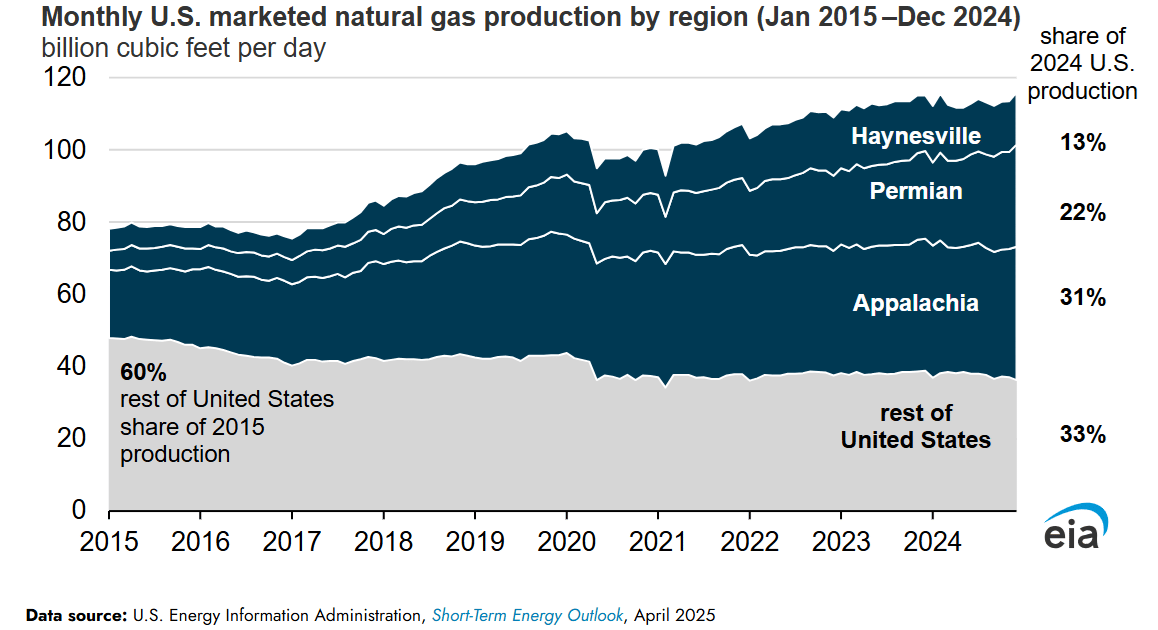
For operators, this leadership position reinforces a measured approach to capital allocation. Growth is no longer about expanding basin footprints, but about optimizing core assets that already compete on a global scale. For royalty owners, the implications are significant. Gas royalties tied to world-class basins benefit from structural demand drivers LNG exports, power generation, and industrial use rather than short-term price cycles alone.
As U.S. gas increasingly sets the marginal supply for global markets, royalty interests in these leading basins represent exposure to one of the most durable energy demand stories of the coming decade with no requirement to fund drilling or operations. U.S. natural gas leadership isn’t an abstract statistic it’s a roadmap for where durable royalty income is created. When individual basins rival entire countries in output, it signals depth of inventory, resilient infrastructure, and long-run demand relevance. That’s exactly the profile PetroPeak targets. | 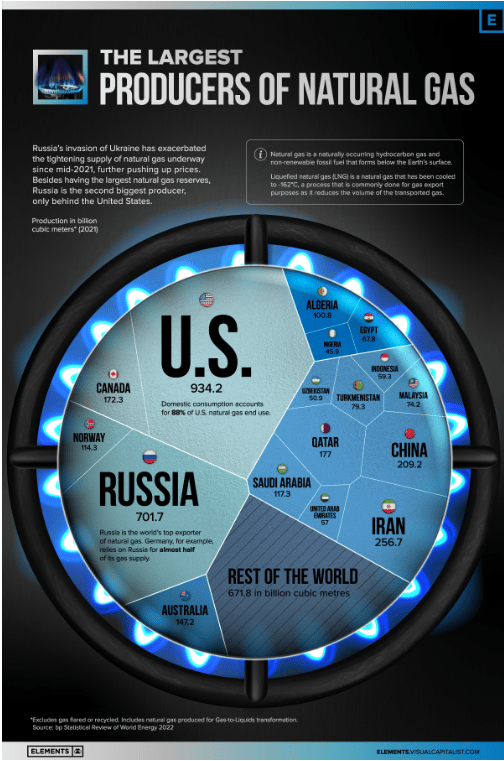 |
As LNG exports expand, power generation grows, and industrial demand re-anchors domestically, gas supply from the Permian, Appalachia, and Haynesville increasingly serves global markets. Operators in these basins prioritize capital discipline, full-field optimization, and takeaway access, which supports steadier development schedules over time.
PetroPeak’s acquisition strategy focuses on royalties positioned within these world-class gas systems minerals tied to top-tier operators, advantaged infrastructure, and repeatable development plans. For investors, this means participation in structural gas demand without funding drilling or assuming operating risk.
In short, U.S. gas leadership translates to visibility and durability. By owning royalties in the basins that set marginal global supply, PetroPeak aligns investor capital with where the industry’s next decade of energy demand will be met.
INVESTOR ADVANTAGE
Owning the World’s Lowest-Cost Gas — Without Operating Risk
The United States is now home to some of the lowest-cost natural gas supply in the world, with basins like Appalachia, the Haynesville, and the Permian producing at a scale that rivals entire countries. As global demand grows driven by LNG exports, power generation, and industrial use these basins increasingly serve as the backbone of global gas markets.
For most investors, however, accessing this opportunity through traditional E&P ownership comes with meaningful challenges: capital intensity, cost overruns, operational risk, and exposure to drilling decisions that can change quickly. Royalty ownership offers a different path.
Royalty owners participate in production revenue without funding drilling, managing operations, or absorbing cost inflation. When operators develop low-cost gas acreage, they carry the capital burden and execution risk, while royalty owners receive a share of production and pricing tied to some of the most competitive gas resources on the planet.
This distinction matters most in disciplined cycles like the one we’re in now. Operators continue to invest in their best gas inventory because it sits at the bottom of the global cost curve, even when prices soften. That activity supports long-lived production and royalty income without requiring additional capital from mineral owners.
At PetroPeak, we focus on royalties tied to these advantaged basins and top-tier operators assets positioned to benefit from global gas demand while remaining insulated from operational risk. It’s exposure to world-class energy supply, delivered through a passive ownership structure designed for long-term investors.
Because owning the resource doesn’t have to mean running the business.
LOOKING AHEAD
A Thoughtful Start to 2026
As we begin 2026, the energy sector is entering the year with discipline, focus, and a renewed emphasis on execution over expansion. Operators are optimizing their best assets, global demand for U.S. natural gas continues to build, and the value of long-lived, low-cost supply is becoming increasingly clear.
For investors, this is an ideal moment to take a thoughtful look at portfolio positioning prioritizing durability, income resilience, and exposure to real assets that benefit from long-term demand trends. Royalty ownership offers a way to participate in these dynamics without taking on operational risk, aligning capital with how the industry is actually evolving.
If you’re considering how to position for the year ahead, now is a natural time to start the conversation.
2026 isn’t about chasing growth, it’s about positioning for durability. Thoughtful investing starts with understanding where long-term value is being built.
Ways to Connect with Us:
Email: [email protected]
Website: www.petropeakinvest.com
Schedule a Call: Book a time here
Follow us on LinkedIn and socials: PetroPeak Investments LLC, @petropeakinvest
Whether you’re exploring royalties for the first time or looking to deepen your exposure, PetroPeak can guide you through every step from understanding the asset class to participating in high-quality, cash-flowing deals.
Because at PetroPeak, it’s about more than just investing. It’s about building long-term income you can count on.